A class pet is one long-term progression pattern within gamification. See the complete gamification guide, classroom examples and platform criteria for the broader design framework.
I laminated a sticker chart for my P3 class back in September. Gold stars for finishing homework, silver for helping a classmate, the works. By the second week of October, half the stars had peeled off the wall and nobody was chasing them anymore. That's not a story about lazy kids. It's a story about a reward that ran out of surprise the moment the novelty wore thin — which for most reward systems is somewhere around week three.
Why sticker charts stop working
A sticker chart has one problem baked into its design: the reward and the effort are the same size every single time. Day one, a gold star feels exciting. By day fifteen, it's just a shape on a wall, because nothing about it has grown, changed, or built toward anything bigger. Students aren't being lazy when they stop caring — they're responding rationally to a system that stopped offering anything new.
There's a second issue, and it's the one that actually bothers teachers more once they notice it: sticker charts and points ledgers rank students against each other in a way that's visible to everyone, all the time. The kid who's slower to settle, who has a rough morning at home, who genuinely struggles with focus — that kid's chart stays empty in full view of the class. You didn't design it to be a public scoreboard of who's falling behind, but that's often exactly what it becomes.
Class pet reward systems solve both problems at once. They give the reward somewhere to grow, and — done right — they shift the frame from "who has the most" to "how is our pet doing," which spreads accountability across the group instead of pinning it on individuals.
What a class pet reward system actually is
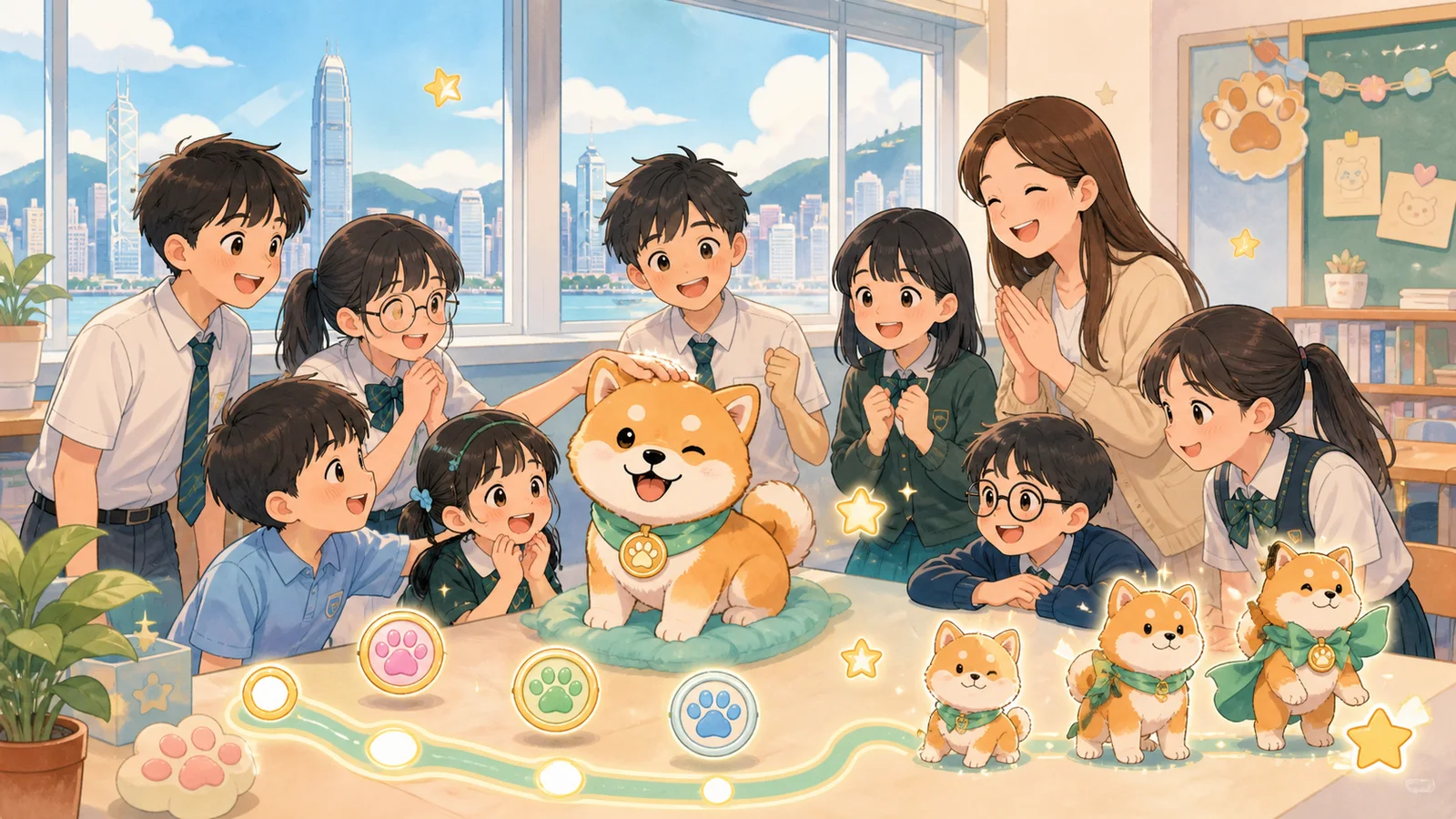
At its simplest, a class pet is a shared virtual (or physical) creature that the whole class feeds with good behaviour. Points earned for things like being on task, cooperating in group work, or tidying up without being asked go toward the pet's growth. As the pet grows, it changes appearance, unlocks new looks, or reaches new stages — and everyone in the room had a hand in that.
The smarter version of this — and the one I'd actually recommend — runs a collective pet and individual pets side by side. The class pet handles group accountability: if 3B as a whole stays focused through a review lesson, everyone contributed to the same creature's growth. Individual pets handle personal motivation: a student who's normally reluctant to participate still has their own pet leveling up on their own timeline, which matters a lot for kids who don't thrive in group comparisons.
This dual structure is worth building into your classroom management approach generally, not just for pets — it's one of the ideas we cover in more depth in our guide to choosing a classroom management system, where class pets show up as one of five pillars that make a tool worth using long-term.
How the point-to-evolution loop works
The mechanic that actually does the motivational heavy lifting is what game designers call a progression loop, and it's simpler than it sounds: earn points, watch something visibly change, want to earn more. A sticker chart doesn't have this loop because a sticker doesn't change into anything. An egg that hatches into a creature, then evolves into a bigger, more detailed version at set point thresholds — that's a loop, and kids track it the way they'd track a level-up in a video game.
A few design details matter more than they look like they should:
- Thresholds should feel reachable weekly, not termly. If the next evolution stage is 40 points away and a good day earns 3, students lose the thread. Aim for milestones a focused week can actually hit.
- The visual change has to be obvious. A pet that "evolves" but looks 90% the same isn't rewarding — kids notice cosmetic laziness immediately.
- Points should be tied to specific, named behaviours, not vague good vibes. "Helped tidy the reading corner" earns a point in a way a student can repeat tomorrow; "was good today" doesn't.
One thing I didn't expect the first term I tried this: students started reminding each other about behaviour, unprompted, because it affected a shared outcome. That peer pressure toward good behaviour is worth more than anything I could enforce from the front of the room.
Pitfalls to avoid: shaming and inflation
Two things quietly wreck a class pet system, and both are easy to fall into without noticing.
Public shaming, even accidental
If your class pet setup includes a visible leaderboard ranking every student's individual points, you've rebuilt the sticker chart problem with better graphics. A student who's near the bottom every single week isn't motivated by seeing that in front of the class — they're just told, publicly, once a day, that they're behind. Keep individual progress private or semi-private (a personal screen, a one-on-one glance), and keep the public, celebratory display for the shared class pet, where the framing is "we did this together."
Point inflation
This one creeps up on you around week six. You start handing out points more freely because the class is having a good day, or because you want to be encouraging, or honestly because it's Friday last period and everyone's tired including you. Within a couple of weeks, points that used to mean something now flow so easily that the pet evolves every other day and the loop collapses — there's no anticipation left. Set your point values once, write them down somewhere you'll actually check, and resist the urge to inflate them even when you're tempted to be generous. Generosity belongs in bonus moments (a surprise "team point" for a genuinely great effort), not in quietly moving the baseline.
A week-one rollout plan
Don't launch a class pet system by explaining every rule on day one. Students won't retain it, and you'll spend more energy managing confusion than managing behaviour. Here's the sequence that's worked for me and for teachers I've compared notes with:
- Monday: introduce the pet itself. Name it as a class (this alone buys enormous buy-in — a pet the students named feels different from one you assigned). Explain only that good behaviour helps it grow.
- Tuesday–Wednesday: award points live, out loud, for two or three specific behaviours only. Don't try to reward everything at once — pick "on task" and "helping a classmate" and stop there for now.
- Thursday: show the first visible change, even a small one. This is the moment that proves the loop is real.
- Friday: spend two minutes as a class looking at how the pet is doing. Ask what helped it grow this week. Let students answer — this is where the habit actually locks in.
Add individual pets in week two, once the collective habit is established. Trying to run both systems from day one is the single most common reason class pet rollouts fizzle — there's simply too much to track for a first-time class.
How SparkMyClass builds this in
We built class pets and rewards as one of the core pieces of SparkMyClass because most reward apps we tried before building our own hit exactly the fatigue problem described above — a pet that reaches its final form in three weeks and then just sits there. Our system runs 30 different pets across 7 evolution stages each, so a class genuinely has somewhere to go for an entire term without repeating a look they've already unlocked.
Points are awarded against customisable behaviour tags rather than a generic "+1," so you can set up the exact two or three behaviours you're focusing on for a given month and watch the data reflect it. And instead of every point cashing out the same way, students can spend earned points on gacha-style scratch card rewards — a bit of randomness in what they unlock keeps the "what will I get" anticipation alive even after the novelty of the pet itself has settled into routine.
If your class is also doing revision through games, it's worth pairing a pet system with a live class activity — we cover exactly that combination in our piece on the tug-of-war quiz game, which run on the same point economy.
Final thoughts
A class pet isn't a gimmick bolted onto classroom management — it's a fix for a specific, well-understood problem: rewards that don't grow stop motivating. Whether you build this with a whiteboard drawing you update by hand or with software that handles the tracking for you, the principle is the same: give the reward somewhere to go, keep individual struggle private, and don't let generosity quietly become inflation.
If you'd rather not maintain the tracking yourself, you can set up a free class on SparkMyClass in a couple of minutes and have the pets, points and behaviour tags ready before your next lesson.
Bring Gamification Into Your Classroom
SparkMyClass features behavior points, pet evolution, and interactive quiz games — making gamified classroom management effortless.